Parfum Versus Toilette: Which Lasts Longer?
That bottle that smells incredible on a tester strip but disappears by lunchtime is usually not a bad fragrance choice. It is often a concentration issue. In the parfum versus toilette debate, the difference is less about whether a scent is masculine, feminine or expensive, and more about how much fragrance oil is in the formula - and how that formula wears on your skin.
If you want a scent that earns compliments on the commute, stays noticeable through work and is still there for evening plans, concentration matters. But it is not the only thing that determines performance. Notes, skin type, weather and how you apply it all affect the result.
Parfum versus toilette: the key difference
Fragrance names can sound needlessly complicated, but the basic principle is simple. Perfume is made from aromatic oils blended with alcohol, water and sometimes other ingredients that help the scent develop. The higher the concentration of aromatic oil, the richer and usually longer-lasting the fragrance will be.
Eau de Toilette, commonly written as EDT, generally contains around 5% to 15% fragrance oil. It is designed to feel lighter, fresher and easier to wear in generous sprays. You might reach for it after a shower, at the gym, on a warm holiday or whenever you want a clean scent without filling the room.
Eau de Parfum, or EDP, typically sits around 15% to 25% oil concentration. It has more depth, more staying power and a stronger scent trail than most toilettes. For many fragrance fans, it is the sweet spot: noticeable without being too heavy, and capable of lasting well into the day.
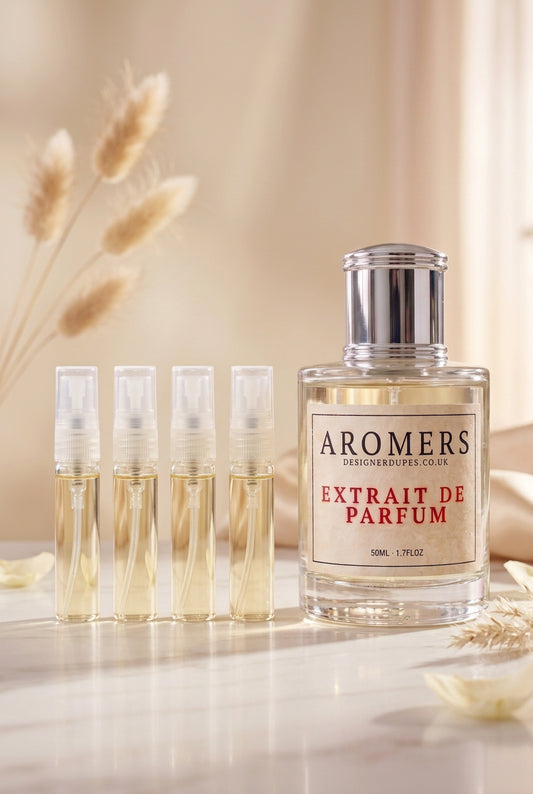
Parfum, sometimes called Extrait de Parfum or pure perfume, is the most concentrated category. Traditional parfums often contain 20% to 40% fragrance oil, although formulations vary between brands. An Extrait at the higher end of that scale is made for serious performance: fewer sprays, a fuller dry-down and long wear that can carry from morning through to night.
The wording on the bottle is useful, but it is not a legal guarantee of identical performance. One brand's Eau de Parfum may outlast another brand's Parfum because of the ingredients used. Still, as a buying rule, a higher concentration gives a fragrance more potential to last and project.
Does parfum always last longer than toilette?
Usually, yes. Parfum has more fragrance oil, and those oils tend to cling to skin and fabric for longer than a lighter EDT blend. A good Eau de Toilette may give you three to six hours of wear, while an Eau de Parfum can often deliver six to ten hours. High-concentration Extrait de Parfum can go beyond that, particularly with warm, dense notes.
But longevity is not just a number on a label. Citrus, aquatic and green scents naturally burn brighter and fade faster, even at a higher concentration. Lemon, bergamot, grapefruit and fresh marine notes are brilliant for an instant lift, but they are not built to behave like oud, amber, vanilla, tobacco or musk.
A woody vanilla Eau de Toilette could still outlast a sharp citrus Eau de Parfum. That is why it pays to consider the scent profile alongside the concentration. If all-day wear is your priority, look for a formula with a strong base of woods, resins, musk, tonka, patchouli or amber as well as a higher oil content.
Your skin also has a say. Fragrance can disappear quickly on dry skin, while moisturised skin tends to hold onto scent for longer. Heat can make perfume project more strongly but may shorten the life of delicate top notes. Cold weather can mute a fragrance at first, then allow deeper notes to sit close to the skin for hours.
Sillage: why stronger is not always better
Longevity tells you how long a scent remains detectable. Sillage tells you how much of a trail it leaves behind as you move. Projection is the related idea of how far the scent reaches from your skin at a given moment.
An Eau de Toilette often starts with a crisp, lively burst. It may project well for the first hour, especially if it is fresh or aromatic, before settling down quickly. Parfum and Extrait formulas tend to open more smoothly and stay closer to the skin at first, then reveal a richer, more persistent scent cloud over time.
That does not mean every occasion calls for maximum sillage. A powerful fragrance can be perfect for dinner, a night out or outdoor events, but less welcome in a packed office, a hospital setting or a long train journey. The smart move is to match your sprays to the strength of the formula and the setting.
For a light EDT, four to six sprays may feel right. For a potent Eau de Parfum, two to four may be plenty. With a 40% Extrait de Parfum, start with one or two sprays and wear it for a full day before deciding you need more. Over-spraying is not a sign of confidence. It is usually a sign that the concentration has been underestimated.
Which fragrance concentration gives better value?
The cheapest bottle is not automatically the best value. If a lighter toilet water needs repeated top-ups and a stronger fragrance performs for eight to 12 hours from a few sprays, the price per wear can look very different.
This is where concentration matters to budget-conscious fragrance buyers. Luxury fragrance prices often rise because of branding, packaging and retail mark-ups, not simply because the juice inside is more concentrated. You can enjoy a premium scent profile without paying for a logo if the formula delivers the quality, accuracy and wear time you actually want.
Aromers focuses on that performance-first approach, with designer-inspired scents available in Eau de Parfum and high-strength Extrait de Parfum formulations. For shoppers who are tired of expensive bottles that fade before lunch, a higher oil concentration makes practical sense: fewer sprays, stronger presence and better value from every bottle.
Still, Eau de Toilette is not the lesser choice. It is often the better choice when you prefer freshness, dislike heavy sweet notes or want an easy daytime fragrance you can spray freely. A bright EDT can feel more appropriate than an intense amber Extrait on a hot July afternoon. Value means buying the concentration that suits how you will genuinely wear it.
How to make any fragrance last longer
Application can improve performance without turning your morning routine into a science project. Spray fragrance onto clean, moisturised skin, ideally after using an unscented body lotion. Focus on pulse points such as the sides of the neck, wrists and inner elbows, where warmth helps the scent develop.
Avoid rubbing your wrists together. It does not completely destroy a fragrance, but it can rush the opening and make the top notes disappear faster. Let the perfume dry naturally instead.
Clothing can help a scent last, especially on knitwear, scarves and coats, but test carefully first. Oils can mark delicate fabrics, and some materials hold a fragrance far longer than skin. A light spray on clothing is enough, particularly with Parfum or Extrait concentrations.
Store bottles away from direct sunlight, radiators and steamy bathrooms. Heat and light can alter a fragrance over time, leaving even a high-quality formula smelling flatter than it should.
Choosing between Parfum and Eau de Toilette
Choose Eau de Toilette if you want lightness, freshness and an easy reach for daytime. Choose Eau de Parfum if you want reliable daily longevity with noticeable sillage. Choose Parfum or Extrait de Parfum if your non-negotiables are depth, lasting power and a scent that remains part of your presence long after the first spray.
The best bottle is not the one with the fanciest label or the highest price. It is the one that smells like you, performs when you need it to, and makes every spray feel worth it.